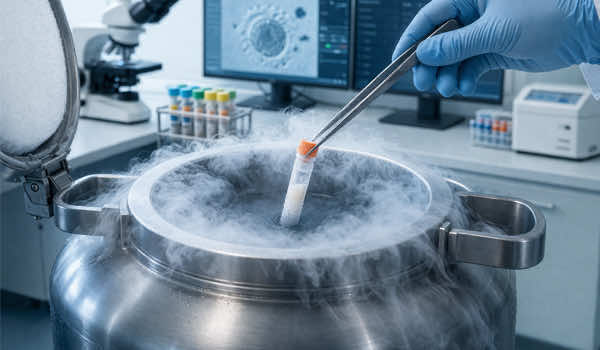
Sperm cryopreservation is a method of freezing sperm for future use. Many men choose this option when planning IVF/ICSI, going through medical treatment, or simply wanting a reliable backup. Under the care of Dr Manmeet Batra, IVF and Fertility Specialist, the process is kept private, simple, and easy to understand. She guides you through each step so you feel comfortable and prepared.
When Sperm Freezing Is Recommended
- You’re planning IVF or ICSI later.
- Your sperm count or motility varies from report to report.
- You’re starting chemotherapy, radiation, or major surgery.
- You worry you may not be able to give a sample on the required day.
- You travel often or have unpredictable work timings.
- You want to secure your fertility for future family planning.
Sperm Cryopreservation Process
Under Dr Manmeet Batra’s care, the sperm cryopreservation process stays simple, private, and clearly explained so you feel comfortable at every step.
1. Giving the Sample
You provide a semen sample in a private collection room. If needed, 1–2 additional samples can be frozen to improve future use.
2. Checking the Quality
In the lab, the andrology team examines your sample for sperm count, movement, and overall health before freezing begins.
3. Preparing the Sample
A protective solution is mixed with the sample to safeguard the sperm during the freezing and thawing process.
4. Freezing at Ultra-Low Temperatures
The sperm is slowly or rapidly frozen (depending on the method) and stored at –196°C in liquid nitrogen.
5. Safe Storage Until You Need It
Your frozen sample stays in a monitored cryobank. It can be stored for many years without losing usefulness.
Effect of Cryopreservation on Sperm Quality & Fertility
It’s normal to worry about whether freezing changes sperm quality. Here’s how sperm freezing actually affects sperm:
- Some sperm may lose motility after thawing, but usually enough healthy sperm remain for ICSI or IVF.
- The DNA inside the sperm is generally well-protected, thanks to modern freezing methods.
- Freezing does not reduce your chance of a pregnancy. Babies born using frozen sperm have outcomes similar to those conceived with fresh samples.
- If your original count is low, Dr Batra may advise freezing more than one sample to ensure better future results.