What is Oocyte Cryostorage?

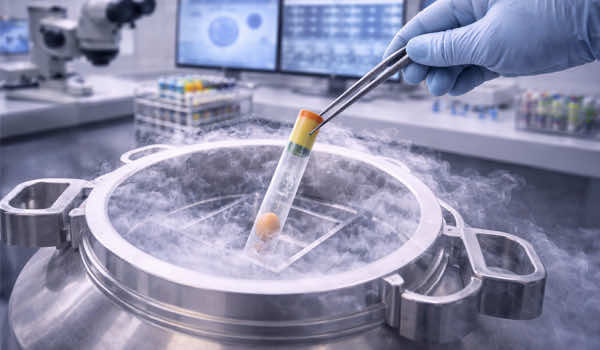
Oocyte cryostorage is the process of freezing and safely storing your eggs for future use. It allows you to preserve your fertility today, so you have the choice to plan a pregnancy when the time feels right. The eggs are frozen using advanced vitrification technology, which protects their structure and keeps them healthy until you’re ready for treatment.

Under the guidance of Dr Manmeet Batra — Gynaecologist, Obstetrician, and Fertility & IVF Specialist — every step of your egg freezing and storage is handled with care. She explains the process clearly, helps you understand what to expect, and ensures your stored eggs remain in a secure, temperature-controlled environment.

Why Egg Cryostorage May Be Recommended

Egg freezing may be suggested if you:

  • Want to plan pregnancy later in life
  • Are you focusing on education, career, or personal goals
  • Have a medical condition that could affect egg quality
  • If you are about to start cancer treatment
  • Have extra eggs from an IVF cycle that you want to preserve


Oocyte Retrieval Procedure (Egg Collection)

The egg retrieval is a quick procedure, and Dr Manmeet Batra,  a renowned Fertility & IVF Specialist in Punjab, personally handles each step so you feel safe, informed, and at ease.

  1. Preparation & Monitoring
    Your ovaries are stimulated with medications so multiple eggs can grow. Ultrasound scans are done to check their size and readiness.

  2. Day of the Procedure
    A thin needle is gently passed through the vaginal route to collect the mature eggs. The procedure usually takes 10–15 minutes.

  3. Recovery
    Most patients rest for a short time in the recovery area and go home the same day. Mild bloating or cramping is normal and settles quickly.

  4. Lab Handling
    Immediately after retrieval, the eggs are examined, assessed for maturity, and prepared for freezing.

Our Services

How the Cryostorage Process (Egg Freezing) Works

  1. Vitrification (Rapid Freezing)
    Eggs are frozen instantly at extremely low temperatures to avoid ice-crystal damage.

  2. Secure, Long-Term Storage
    The frozen eggs are stored in a temperature-controlled cryobank with continuous monitoring.

  3. Future Use
    When you decide to plan a pregnancy, the eggs are thawed and used in IVF or ICSI, depending on your treatment plan.