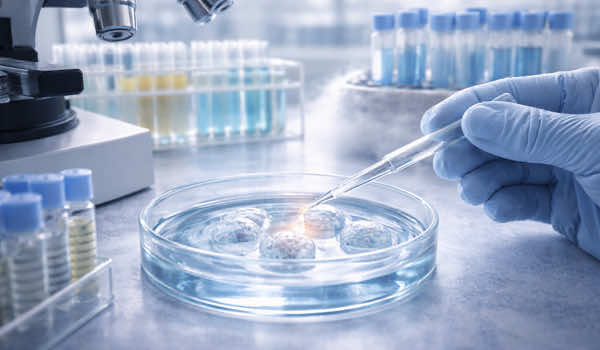
In Vitro Fertilization (IVF) is an advanced fertility treatment that helps couples conceive when natural pregnancy isn’t happening. In this process, a woman’s eggs are collected from the ovaries and fertilised with sperm in a specialised laboratory. The fertilised egg, called an embryo, is then placed safely inside the uterus, where it can implant and grow into a pregnancy.
When is IVF the Right Option?
IVF is recommended when:
- Fallopian tubes are blocked or damaged.
- The male partner has a low sperm count or poor sperm quality.
- Ovulation problems, such as PCOS or hormonal imbalance, exist.
- Endometriosis or uterine conditions affect fertility.
- Previous fertility treatments, like IUI, have failed.
- Donor eggs or sperm are required, or surrogacy is being considered.
If you’ve been trying for more than a year without success, it’s advisable to consult the best IVF centre in Punjab for a detailed evaluation and personalised treatment plan.
How Does the IVF Process Work?
When you visit an IVF centre, your treatment begins with a detailed consultation. The doctor reviews your medical history, test results, and understands your fertility challenges. Once both partners are evaluated, a personalised IVF plan is made for you. The IVF journey takes about four to six weeks and includes these main steps:
- Ovarian Stimulation
You’ll be prescribed fertility medicines or hormone injections for about 10–12 days to help your ovaries produce multiple eggs in one cycle, so there are better chances of forming healthy embryos. During this time, your doctor will monitor your progress through regular blood tests and ultrasound scans to track the growth of eggs.
- Egg Retrieval
Once your eggs are ready, your doctor schedules a short procedure to collect them. It’s done under mild anaesthesia, so you’ll feel no pain. Using ultrasound guidance, the eggs are gently retrieved from the ovaries with a fine, specialised needle. The process takes about 15–20 minutes, and you can usually go home after a few hours.
- Fertilisation
The collected eggs are then placed in a special lab dish and combined with your partner’s sperm. In some cases, a single sperm is injected directly into an egg — a method called ICSI — to improve fertilisation chances. The dish is then kept in a controlled incubator to allow fertilisation to occur.
- Embryo Growth
After fertilisation, the embryos are closely observed for 3–5 days. Embryologists monitor their growth and select the healthiest embryos for transfer. Any extra good-quality embryos can be frozen safely for future use.
- Embryo Transfer
When the embryos are ready, one or two of the best ones are gently placed inside your uterus using a thin, flexible tube. This is a quick and painless procedure, and you can resume normal activity the same day.
- Pregnancy Test
After about two weeks, a blood test called Beta hCG is done to check if the embryo has implanted successfully. If the test is positive, it confirms the start of your pregnancy.