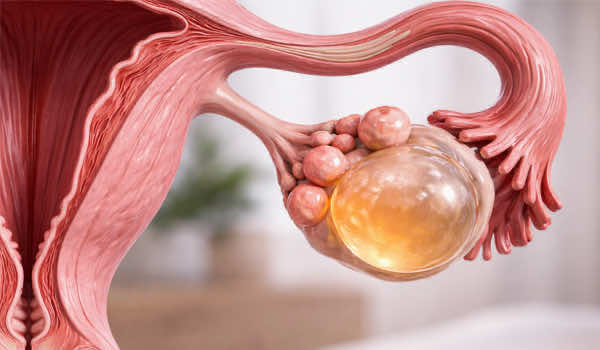
A cyst in the ovary is a fluid-filled swelling that develops on or inside ovarian tissue. They are quite common and, in many cases, harmless. Some cysts go away on their own, while others may cause discomfort or require medical attention depending on their size, type, and symptoms.
Ovarian Cyst Symptoms
Ovarian cyst symptoms can vary from woman to woman. While some may not notice any signs, others may experience:
- Lower abdominal or pelvic pain
- A feeling of heaviness or discomfort on one side of the abdomen
- Irregular or painful periods
- Bloating or abdominal fullness
- Pain during physical activity or intercourse
- Severe pain that can start suddenly when a cyst ruptures or undergoes torsion
What are the Ovarian Cyst Causes
Ovarian cysts can develop due to several underlying reasons, including:
- Natural hormonal shifts that occur during the cycle, especially near ovulation.
- Functional or ovulation-related cysts form when the ovary does not release an egg properly.
- Pregnancy-related hormonal shifts in the early stages.
- Endometriosis-related tissue growth, where endometrial tissue involves the ovary and leads to the formation of chocolate cysts.
- Hormonal imbalance affecting normal ovarian function.
- Bleeding within the ovary which may result in a hemorrhagic ovarian cyst.
- Conditions where cysts develop on one ovary, such as a left ovarian hemorrhagic cyst
Types of Ovarian Cysts
There are different types of ovarian cysts, and identifying the type helps in deciding the right treatment.
- Hemorrhagic ovarian cyst: Forms when bleeding occurs within a cyst and may cause sudden pain
- Left ovarian hemorrhagic cyst: A hemorrhagic cyst specifically affecting the left ovary, often causing pain on the left side
- Endometriosis ovarian cyst (chocolate cyst): Develops due to endometriosis and may affect fertility and cause chronic pelvic pain