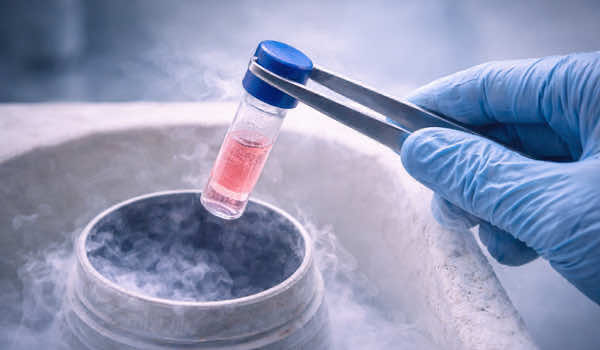
Embryo freezing, also called Embryo Cryopreservation, is a safe and reliable way to preserve embryos for future pregnancy. During this process, eggs and sperm are combined in the lab and fertilised to create embryos. These embryos are then frozen and stored safely using vitrification. In the future, when you want to get pregnant, the frozen embryos are thawed and placed into the uterus through an IVF procedure.
Does Freezing an Embryo Affect It?
Freezing an embryo does not harm it when modern techniques like vitrification are used. This rapid-freeze method protects the embryo’s structure and quality, allowing it to survive safely for many years. Most embryos thaw well, and the success rates using frozen embryos are as good as—sometimes even better than—fresh embryo transfers.
Only healthy and good-quality embryos are carefully chosen for freezing, so your future chances of pregnancy remain strong under Dr Manmeet Batra’s guidance.
Is Embryo Freezing Right For You?
Embryo freezing may be suitable if:
- You want to grow your family gradually and plan future pregnancies.
- You are undergoing an IVF cycle and want to store extra embryos for future transfers.
- You prefer transferring one embryo at a time (elective single embryo transfer).
- You’re undergoing medical treatment that may affect fertility.
- You want to avoid repeated egg retrieval cycles.
Embryo freezing gives you the reassurance that your embryos are safely preserved for whenever you’re ready for pregnancy.
Benefits of Embryo Freezing
- Gives you more flexibility in family planning
- Avoids repeating egg retrieval procedures
- Helps improve IVF success rates
- Safely stores extra embryos from your current cycle
- Ideal for single embryo transfers
- Useful for medical, personal, relationship, or timing reasons
How the Embryo Freezing Process Works
1. Consultation & Planning
Dr Manmeet Batra helps you understand how many embryos you are likely to create, the expected success rates, and what options suit your fertility goals.
2. IVF Stimulation & Egg Retrieval
The first steps are the same as IVF: hormone injections, monitoring scans, and the egg retrieval procedure.
3. Fertilisation in the Lab
Collected eggs are fertilised with sperm to create embryos. They are monitored closely for growth and development.
4. Embryo Selection & Freezing
Healthy embryos (usually Day 3 or Day 5/Blastocyst stage) are frozen using vitrification — a rapid-freeze method that protects the embryo’s quality for years.
5. Future Embryo Transfer
When you are ready for pregnancy, the embryos can be thawed and transferred into the uterus in a planned cycle.